Project summary
Project summary
At Lenkie, I identified that the customer dashboard was not fully supporting how customers actually used the product. Behavioural analysis showed that users consistently skipped most elements and went straight to their bills, which limited engagement and slowed key actions.
I partnered closely with engineering and business stakeholders to reshape the dashboard into a task-focused workspace centred on clear, actionable billing workflows. Within four weeks, this work;
* Reduced bounce rate by 61%,
* Increased engagement by 27%,
* Drove an 84% increase in credit facility utilisation.
At Lenkie, I identified that the customer dashboard was not fully supporting how customers actually used the product. Behavioural analysis showed that users consistently skipped most elements and went straight to their bills, which limited engagement and slowed key actions.
I partnered closely with engineering and business stakeholders to reshape the dashboard into a task-focused workspace centred on clear, actionable billing workflows. Within four weeks, this work;
* Reduced bounce rate by 61%,
* Increased engagement by 27%,
* Drove an 84% increase in credit facility utilisation.
Context
Context
Lenkie Technologies is a fintech platform for business credit and bill management in the United Kingdom. Whilst no formal concerns had been raised about the dashboard, I noticed patterns in user behaviour that suggested we might not be serving our users' actual needs.
Lenkie Technologies is a fintech platform for business credit and bill management in the United Kingdom. Whilst no formal concerns had been raised about the dashboard, I noticed patterns in user behaviour that suggested we might not be serving our users'
actual needs.
Identifying the Opportunity
Identifying the Opportunity
During routine product monitoring, I observed that despite having a feature-rich dashboard, engagement metrics suggested users were treating it as a pass-through rather than a destination. This prompted me to investigate whether our dashboard architecture aligned with actual user intent.
My hypothesis:
Users were coming to complete specific tasks, but our interface was designed for passive information consumption.
During routine product monitoring, I observed that despite having a feature-rich dashboard, engagement metrics suggested users were treating it as a pass-through rather than a destination. This prompted me to investigate whether our dashboard architecture aligned with actual user intent.
My hypothesis:
Users were coming to complete specific tasks, but our interface was designed for passive information consumption.
Building the Evidence
Building the Evidence
To validate this hypothesis and build a compelling case for change, I conducted an independent analysis of 120 days of behavioural data.
What the data revealed:
Navigation patterns:
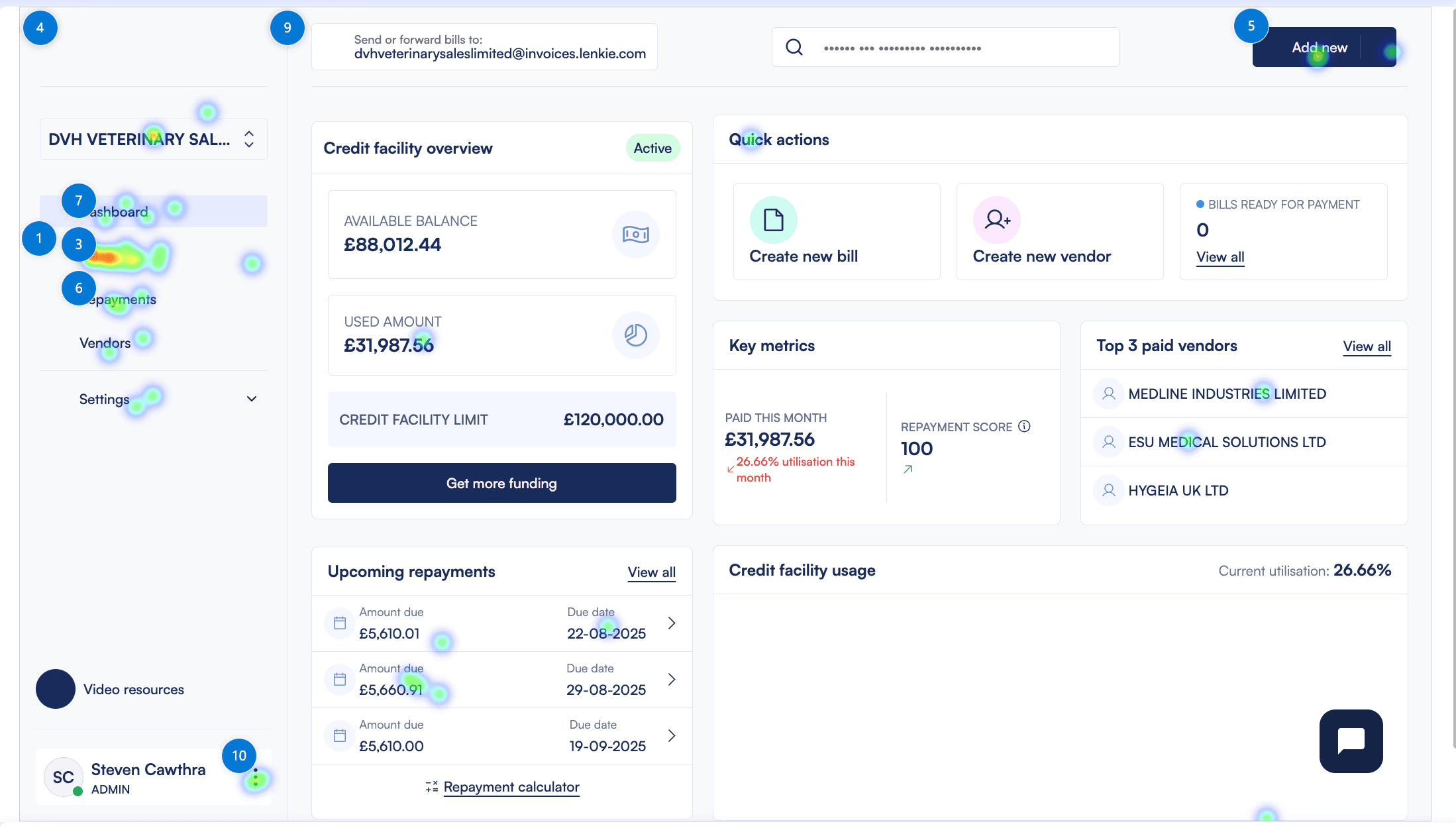
78% of users bypassed quick action buttons entirely, navigating directly to the bills table within the first 10 secondsAttention mapping:
Eye-tracking data showed the facility utilisation graph (occupying prime screen real estate) received minimal visual engagementTask intent:
Session recordings demonstrated clear bill-payment intent, with users consistently following the same narrow path through the interface
To validate this hypothesis and build a compelling case for change, I conducted an independent analysis of 120 days of behavioural data.
What the data revealed:
Navigation patterns:
78% of users bypassed quick action buttons entirely, navigating directly to the bills table within the first 10 secondsAttention mapping:
Eye-tracking data showed the facility utilisation graph (occupying prime screen real estate) received minimal visual engagementTask intent:
Session recordings demonstrated clear bill-payment intent, with users consistently following the same narrow path through the interface
The insight:
Our dashboard was optimised for comprehensive financial overviews when users actually needed a streamlined task completion interface.
The insight:
Our dashboard was optimised for comprehensive financial overviews when users actually needed a streamlined task completion interface.
Research & Inspiration
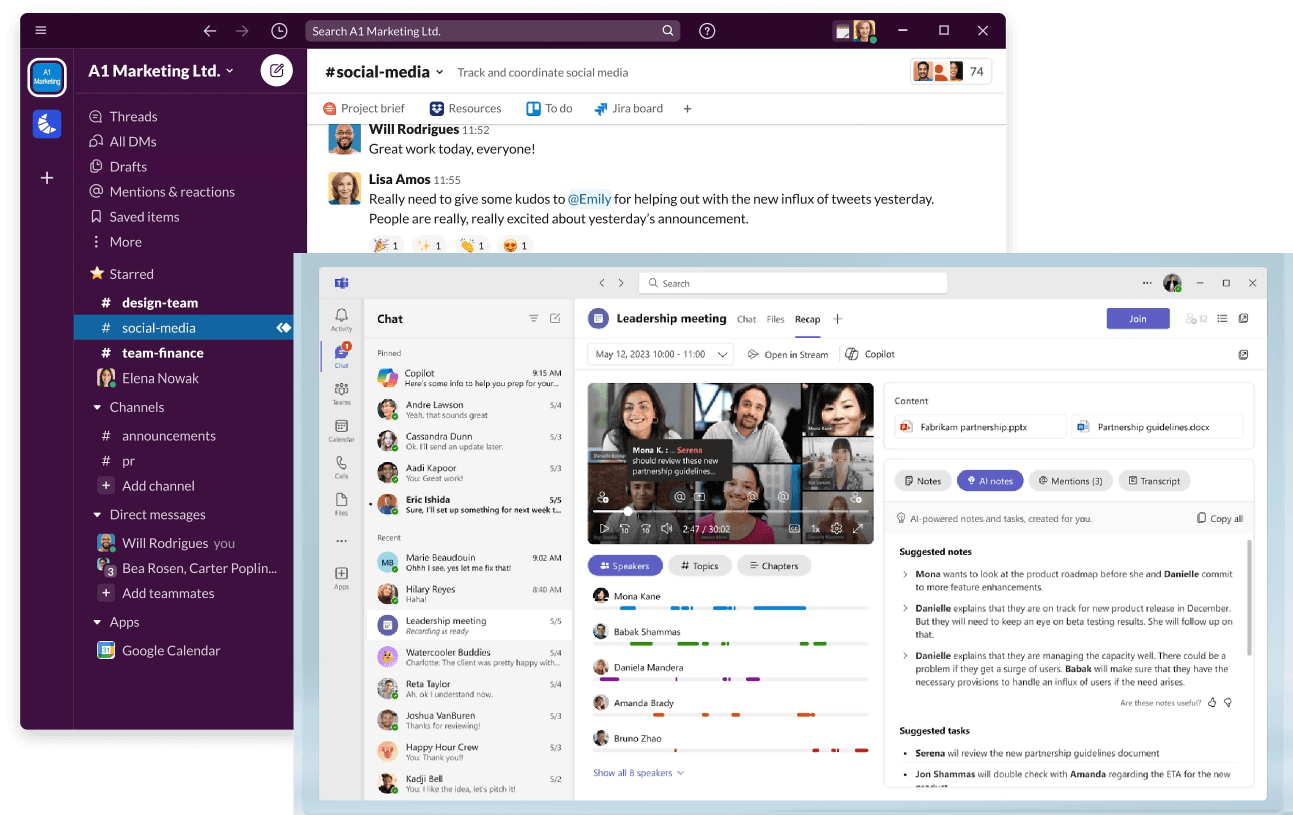
To inform my design approach, I studied how successful productivity and communication platforms handle similar challenges. I analysed tools like Slack, which prioritise task completion over information dashboards.
Key observations:
These platforms position primary content (messages, tasks) at the centre, with supporting features in sidebars or secondary views
They minimise friction between landing and action, recognising that users arrive with specific intent
Information density is calibrated for scanning and quick decision-making rather than passive consumption
This research reinforced that our users' behaviour mirrored patterns seen in productivity tools: they wanted to land, act, and move on.
To inform my design approach, I studied how successful productivity and communication platforms handle similar challenges. I analysed tools like Slack, which prioritise task completion over information dashboards.
Key observations:
These platforms position primary content (messages, tasks) at the centre, with supporting features in sidebars or secondary views
They minimise friction between landing and action, recognising that users arrive with specific intent
Information density is calibrated for scanning and quick decision-making rather than passive consumption
This research reinforced that our users' behaviour mirrored patterns seen in productivity tools: they wanted to land, act, and move on.
Making the Case
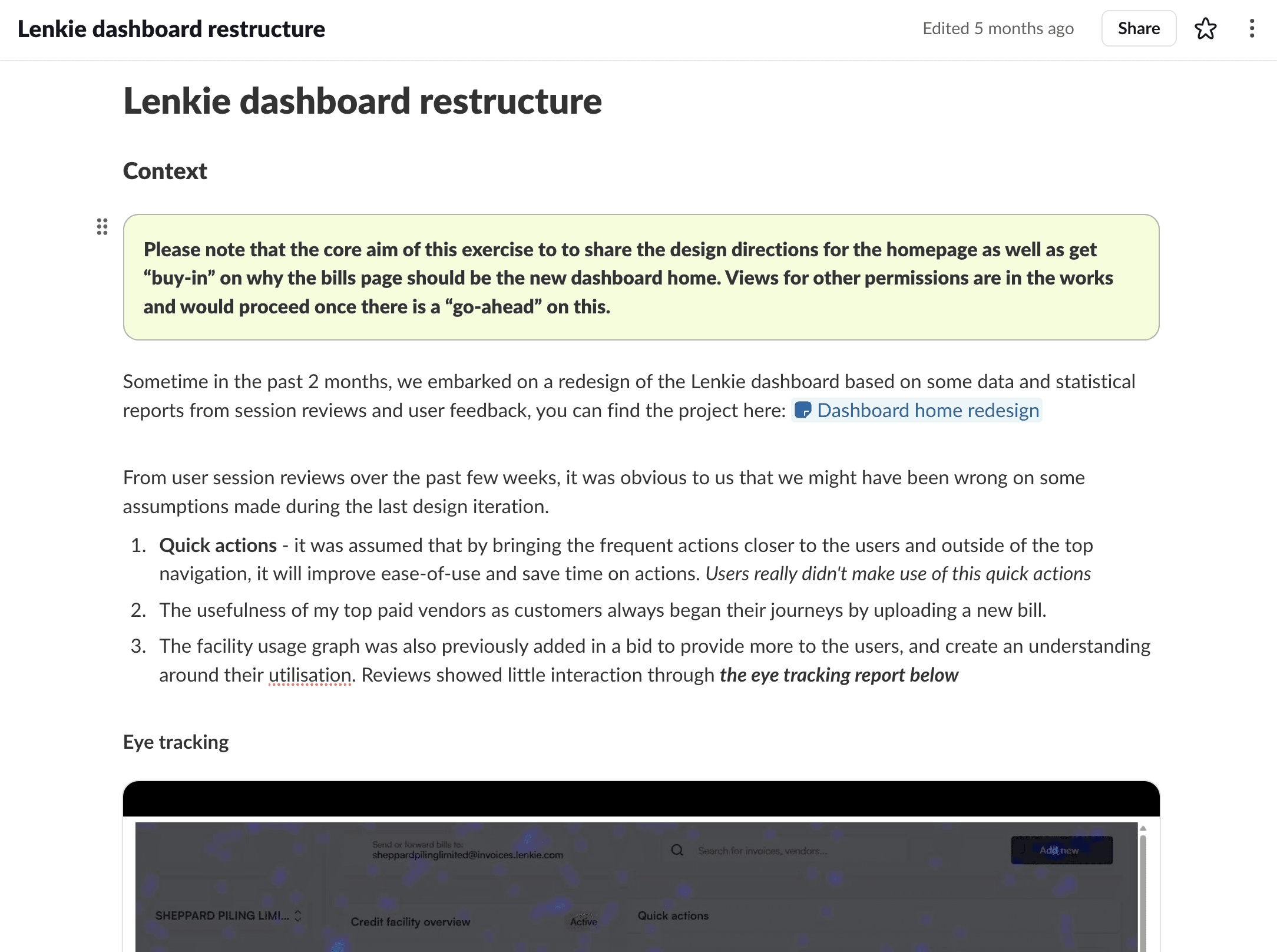
I compiled my findings into a presentation for senior management, demonstrating the gap between our current design and observed user behaviour. The data made a clear case: we had an opportunity to significantly improve engagement and task completion by restructuring around user intent.
The proposal:
Restructure the dashboard to prioritise the bills table, transforming it from an information hub into an action-oriented workspace, drawing on proven patterns from productivity tools.
With stakeholder buy-in secured, I led the redesign effort.
I compiled my findings into a presentation for senior management, demonstrating the gap between our current design and observed user behaviour. The data made a clear case: we had an opportunity to significantly improve engagement and task completion by restructuring around user intent.
The proposal:
Restructure the dashboard to prioritise the bills table, transforming it from an information hub into an action-oriented workspace, drawing on proven patterns from productivity tools.
With stakeholder buy-in secured, I led the redesign effort.
The Design Solution
The Design Solution
I restructured the entire dashboard experience around what the data showed users actually needed:
Core design decisions:
Task-first architecture:
Elevated the bills table from a nested page to the primary interface, eliminating unnecessary navigation frictionActionable information design:
Restructured table data with status badges, due dates, and inline payment triggers to support immediate decision-makingSpatial efficiency:
Implemented a collapsible sidebar to maximise workspace for the primary taskProgressive disclosure:
Consolidated facility metrics into scannable, high-level indicators, moving detailed graphs to dedicated views for users who needed them
I restructured the entire dashboard experience around what the data showed users actually needed:
Core design decisions:
Task-first architecture:
Elevated the bills table from a nested page to the primary interface, eliminating unnecessary navigation frictionActionable information design:
Restructured table data with status badges, due dates, and inline payment triggers to support immediate decision-makingSpatial efficiency:
Implemented a collapsible sidebar to maximise workspace for the primary taskProgressive disclosure:
Consolidated facility metrics into scannable, high-level indicators, moving detailed graphs to dedicated views for users who needed them
Validating the Impact
Validating the Impact
A 4 week post-launch analytics validated both the initial hypothesis and the
design approach:
A 4 week post-launch analytics validated both the initial hypothesis and the
design approach:
61%
Bounce rate
reduction
Bounce rate reduction
27%
Increase in
engagement
Increase in engagement
84%
Increase in credit
facility utilisation
Increase in credit facility utilisation
14%
Reduction in task
completion time
Reduction in task completion time
What This Demonstrated
What This Demonstrated
This project exemplifies how continuous product monitoring and proactive investigation can uncover significant opportunities for improvement, even when metrics appear acceptable on the surface.
By building a data-backed case for change and drawing on proven patterns from best-in-class productivity tools, I was able to secure resources for a redesign that fundamentally improved how users interact with the platform.
Key takeaway:
Sometimes the most impactful work comes from questioning what's already 'working' and investigating whether it could work better.
This project exemplifies how continuous product monitoring and proactive investigation can uncover significant opportunities for improvement, even when metrics appear acceptable on the surface.
By building a data-backed case for change and drawing on proven patterns from best-in-class productivity tools, I was able to secure resources for a redesign that fundamentally improved how users interact with the platform.
Key takeaway:
Sometimes the most impactful work comes from questioning what's already 'working' and investigating whether it could work better.
More works
More works

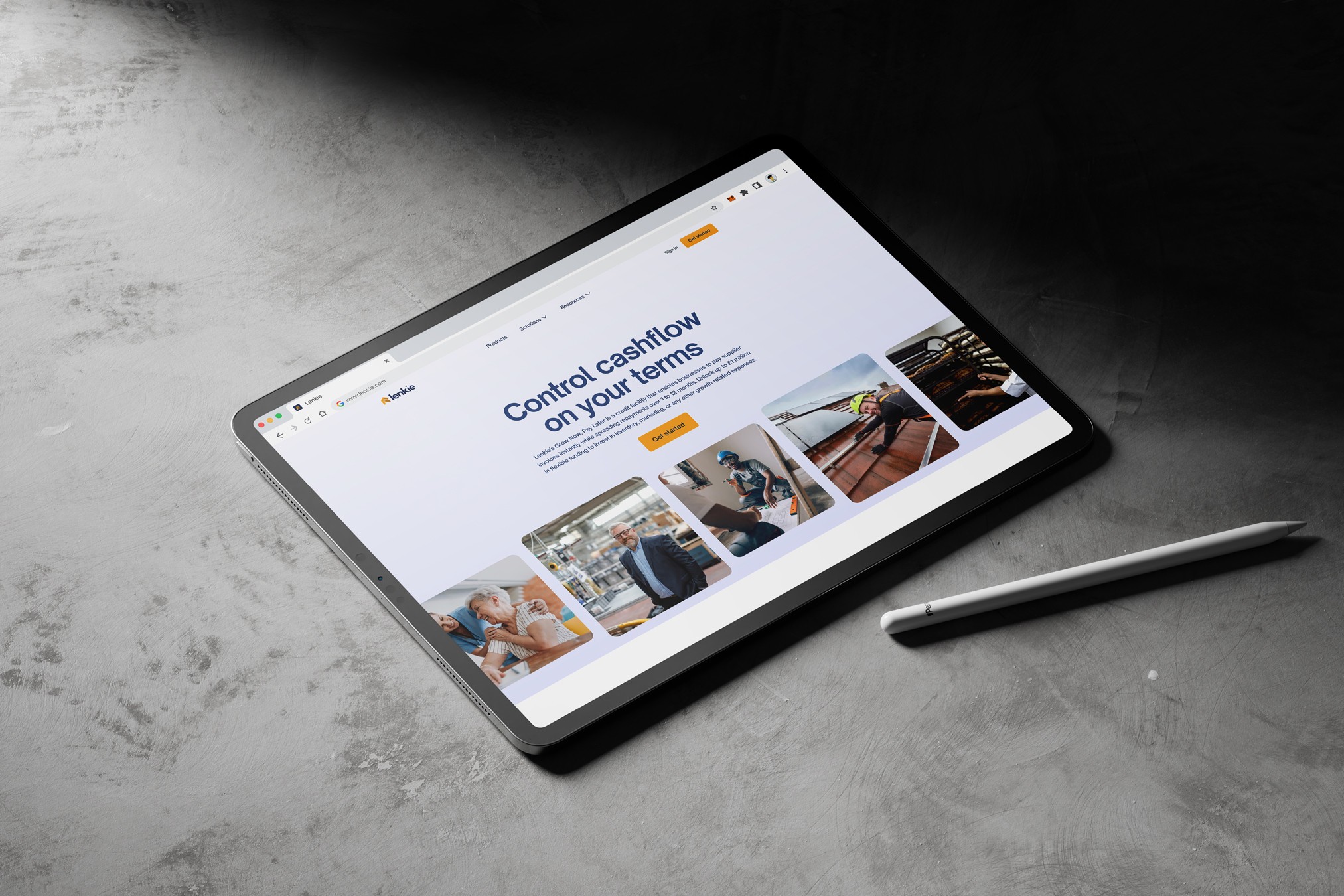

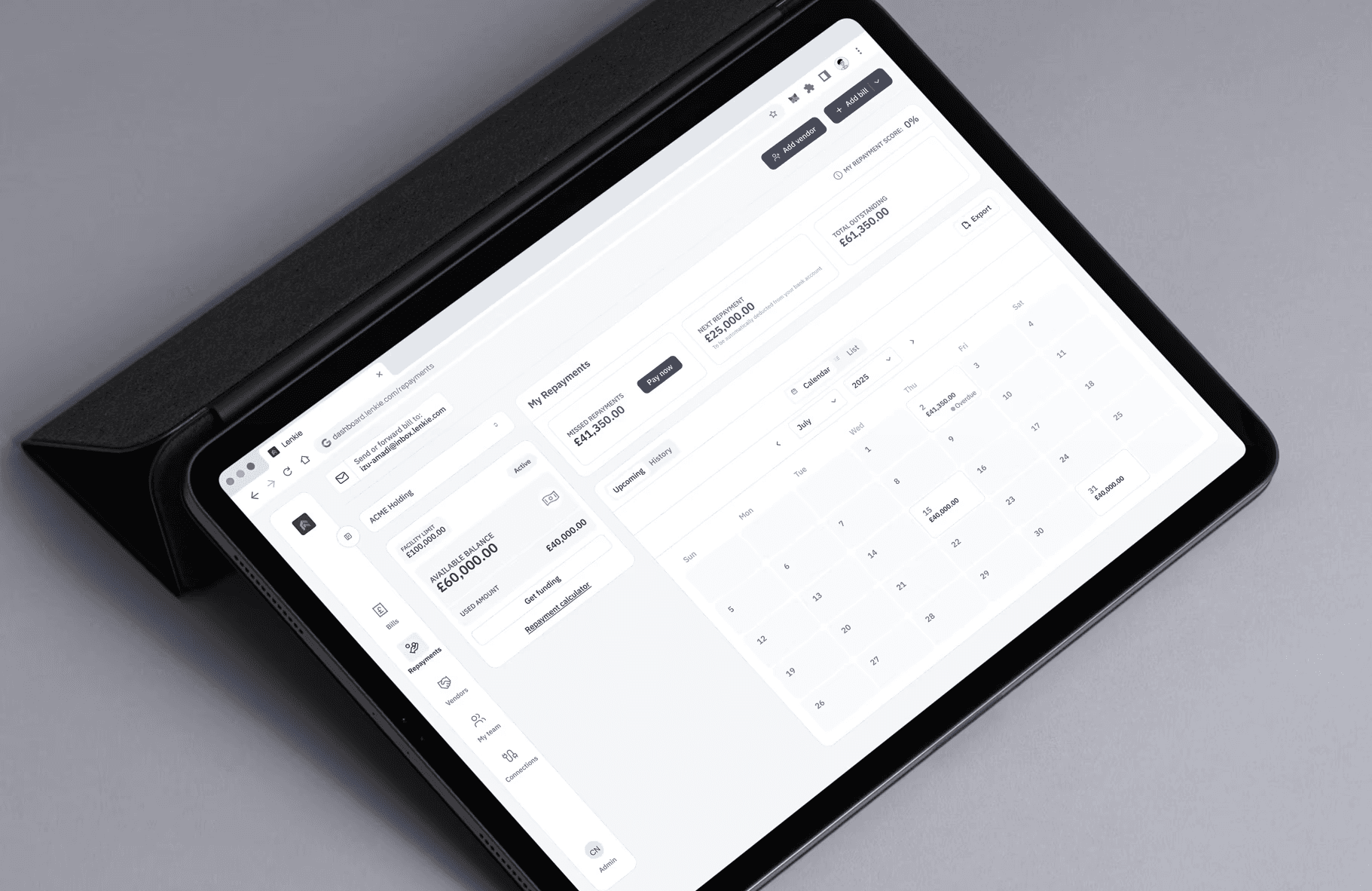
Designing for Intent: A strategic redesign that increased credit facility utilisation by 84%
Designing for Intent:
A strategic redesign that increased credit facility utilisation by 84%
ROLE
Lead Designer
TAGS
Product
Sept. 2025
COMPANY
Lenkie Technologies
COLLABORATORS
Remy Dike - Designer
Abiodun Olonu | Paul Emas - Frontend
Kennedy Sigauke | Vincent Nyanga | Nonso Udenwani - Backend